
Miniaturization: smaller devices, larger possibilities.
How micro-molding is expanding what medical device manufacturers can design, validate, and produce.
Miniaturization, enabled by advances in micro injection molding, is helping medical device manufacturers develop the next generation of devices that are smaller, more precise, and better suited for minimally invasive treatments.
As devices become smaller and more complex, micro injection molding has emerged as a key manufacturing technology for producing high-precision polymer components that cannot be economically or consistently manufactured using conventional molding methods.
Today, micro injection molding is used to manufacture miniature components such as implant delivery system parts, instrumentation features, drug delivery elements, locking mechanisms, and precision inserts used across a wide range of surgical, diagnostic, and monitoring devices. These parts often weigh less than a gram and incorporate intricate geometries, micro-scale features, and extremely tight dimensional tolerances.
The technology offers several advantages for device manufacturers:
- High precision and repeatability for complex micro-scale geometries.
- Support for minimally invasive device designs, enabling smaller surgical instruments and implant delivery systems.
- Material compatibility with high-performance medical-grade polymers such as PEEK, PPSU, LCP, and bioresorbable materials.
- Scalability for high-volume production while maintaining consistent quality and reducing part-to-part variation.
- Integration of multiple functions into a single molded component, reducing assembly requirements and improving reliability.
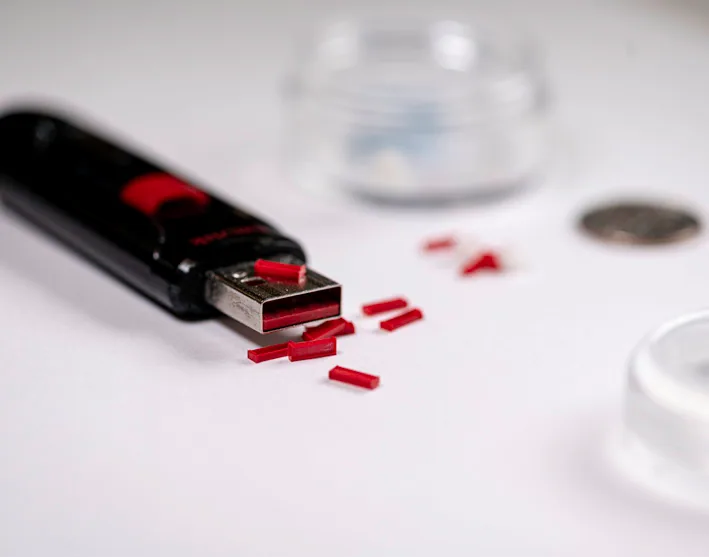
Miniaturization is changing the procedure, not just the part
Across implant delivery, minimally invasive instrumentation, diagnostics, drug delivery, and robotic-assisted systems, medical device OEMs face the same pressure: make devices smaller without making them weaker, harder to use, or more difficult to manufacture. Clinicians want smaller incisions, lower-profile instruments, and better access to confined anatomy. Product teams want more functions in less space. Quality and regulatory teams need every critical feature to be measurable and repeatable. The result is a design problem in which each fraction of a millimeter can affect performance, assembly, validation, and cost.
That pressure changes the meaning of miniaturization. The objective is not simply to reproduce an existing part at a smaller scale but to rethink the device around the clinical opportunity and then select manufacturing processes capable of preserving performance at micro scale. Micro-molding plays a larger role because it can create intricate polymer components with thin walls, fine channels, locking geometries, living hinges, snap features, alignment elements, and other integrated functions that would be difficult or uneconomical to machine and assemble separately.
Challenge
Device manufacturers must reduce device profiles while preserving mechanical strength, usability, quality, and regulatory readiness.
Solution
Specialized micro injection molding combines advanced polymers, micro tooling, early design for manufacturability, scientific process control, automation, and high-resolution inspection.
Results
The approach can enable less invasive procedures, consolidate components, improve repeatability, and scale sophisticated miniature devices from prototype through validated production.
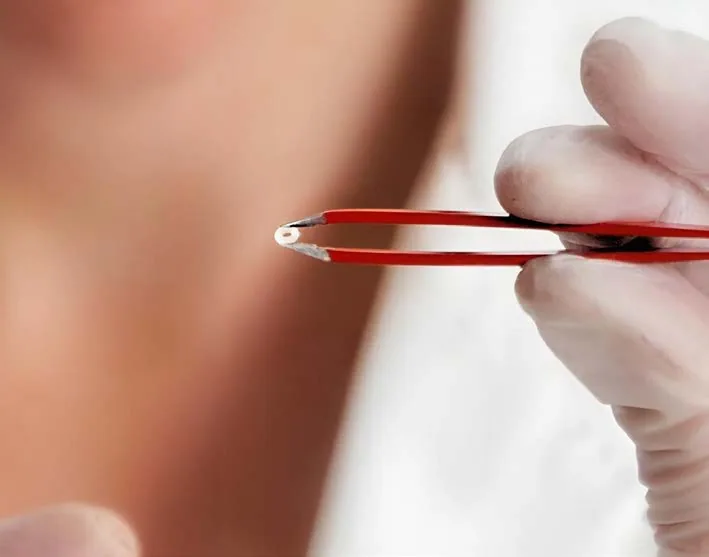
Micro-molding manufacturing benefits
Fully automated for mass production. European micro-molding machines, built to grow with current and future demand.
Sub-gram precision. Parts from 0.001g with micron-level tolerances and repeatable shot accuracy—some parts are smaller than a grain of salt.
Demanding materials. PEEK, bioresorbable polymers, and other high-performance resins processed at injection pressures up to 20,000 PSI.
Tool design & fabrication. In-house intricate tooling capability, from single-cavity prototypes to high-volume multi-cavity production tools.
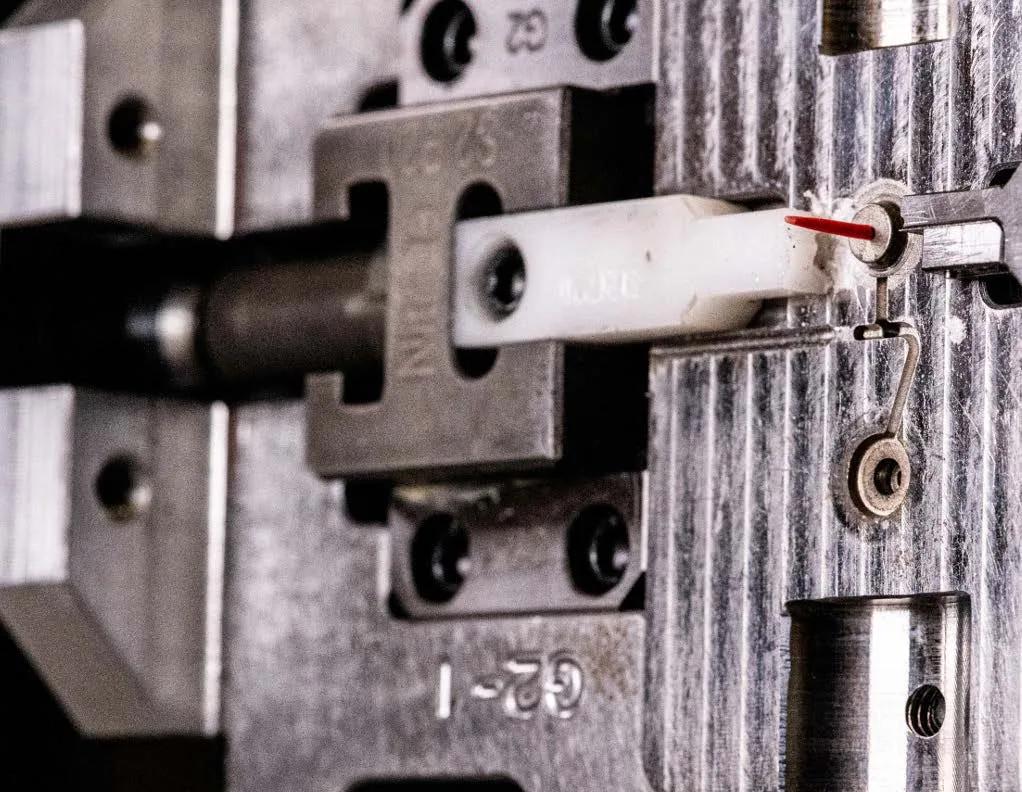
Advanced micro-molding equipment
Fully encapsulated, with robotics integrated and built for tight tolerances.
- Molding press sizes 5 to 50 ton
- Completely automated work cell
- Insert injection molding
- Specialized part extraction
- Clean room assembly
- Exact plane-parallel mold guidance
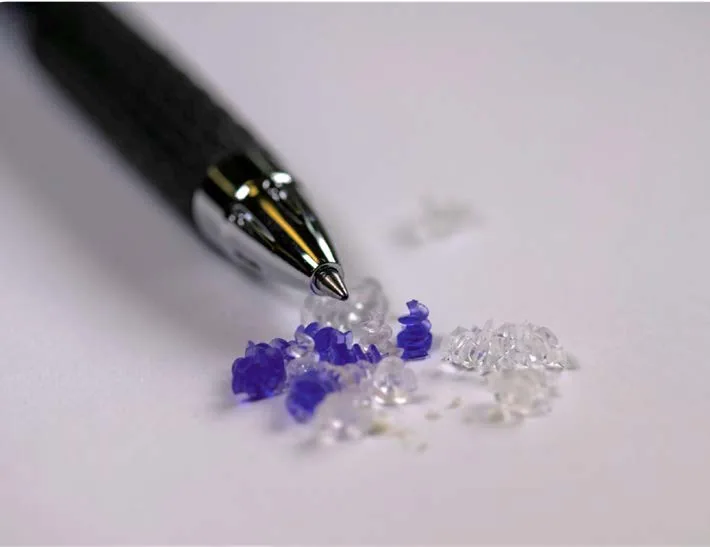
Complex custom tooling
Developing the right tooling for your project's specific requirements.
- Single cavity tooling
- Multi-cavity tooling
- Hot runner systems
- Multiple tools fabricated concurrently
When to integrate micro-molding
Micro-molding should be considered during concept development, not after design lock. Its value is not merely a smaller part; it is a more capable device and a more robust path to production.
Discover how Cordica Medical can implement the benefits of micro-molding technologies into your device manufacturing.
Start a conversation